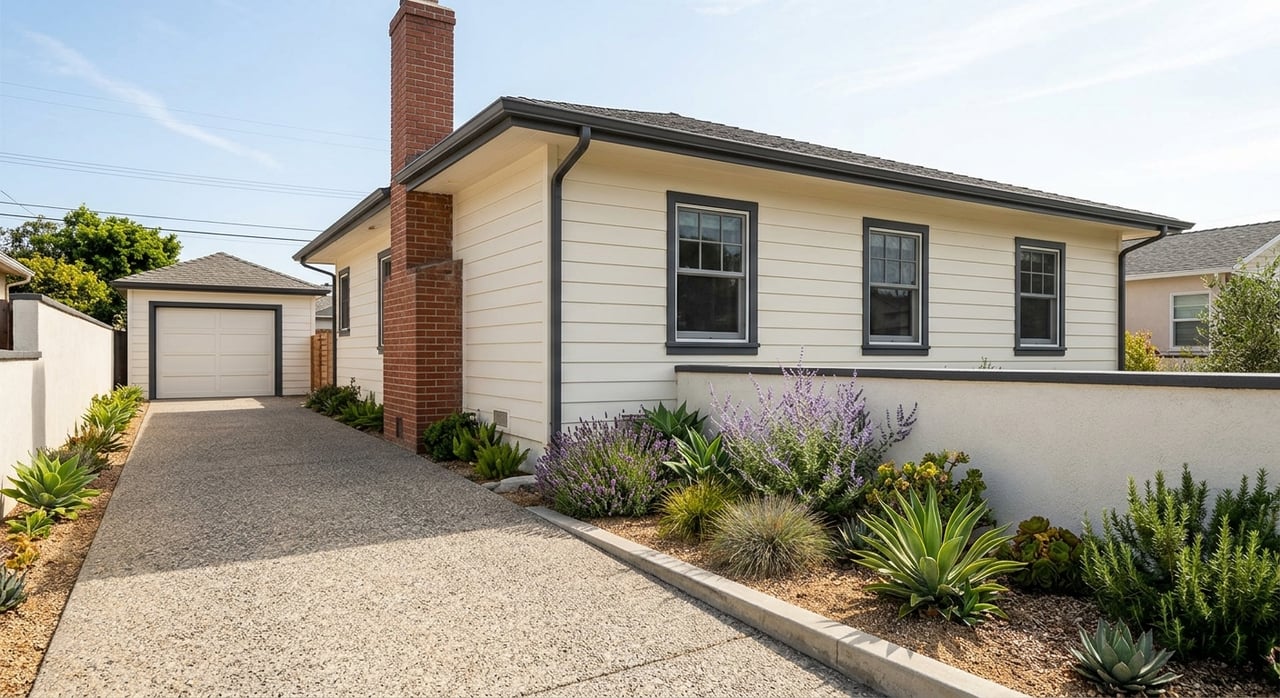
If you are house hunting in Kensington with an eye on future flexibility, ADU potential can be a smart filter from day one. The right property may give you room for multigenerational living, long-term rental income, or a better use of existing space, but not every lot or layout makes that easy. This guide will help you spot the features that matter most in Kensington so you can evaluate homes with more confidence. Let’s dive in.
Why Kensington ADU potential starts with county rules
Kensington is an unincorporated Contra Costa County community, which means county rules and permitting are the starting point for ADU research. When you are evaluating a property, it is important to confirm the parcel’s jurisdiction and zoning through county tools instead of relying only on the mailing address.
That step matters because ADU feasibility is tied to the actual parcel, not just the neighborhood name. A home that looks promising online may still need a closer review of zoning, setbacks, site conditions, and permit requirements before you can judge its true potential.
What an ADU can realistically do for you
An ADU can create useful flexibility for family living or long-term rental income. For many buyers, that means space for relatives, a separate home office setup, or an additional unit that may support monthly cash flow over time.
In Contra Costa County, ADUs are not allowed to be permitted for short-term rental use. If you are buying with an income strategy in mind, it is smarter to underwrite the opportunity around long-term rental use or personal flexibility rather than vacation rental revenue.
Lot features that usually improve ADU feasibility
Some properties are simply easier to work with than others. In Kensington, the most promising lots often have usable side-yard or rear-yard space, simple site geometry, and room to think through access and utility routing without major site changes.
State rules do not allow minimum lot size requirements for ADUs, so a smaller lot is not automatically a deal breaker. What often matters more is whether the site can meet objective standards such as setbacks and whether the shape of the lot gives you practical options.
Look beyond lot size
For many attached or detached ADUs, side and rear setbacks of no more than four feet are required under state rules. ADUs created within an existing structure, or in the same location as an existing structure, generally do not require a setback.
That is why a home with a usable garage, basement, or interior conversion area can be especially attractive. You may have a more straightforward path than you would with a property that needs a brand-new structure placed on a complicated site.
Watch for slope and site complexity
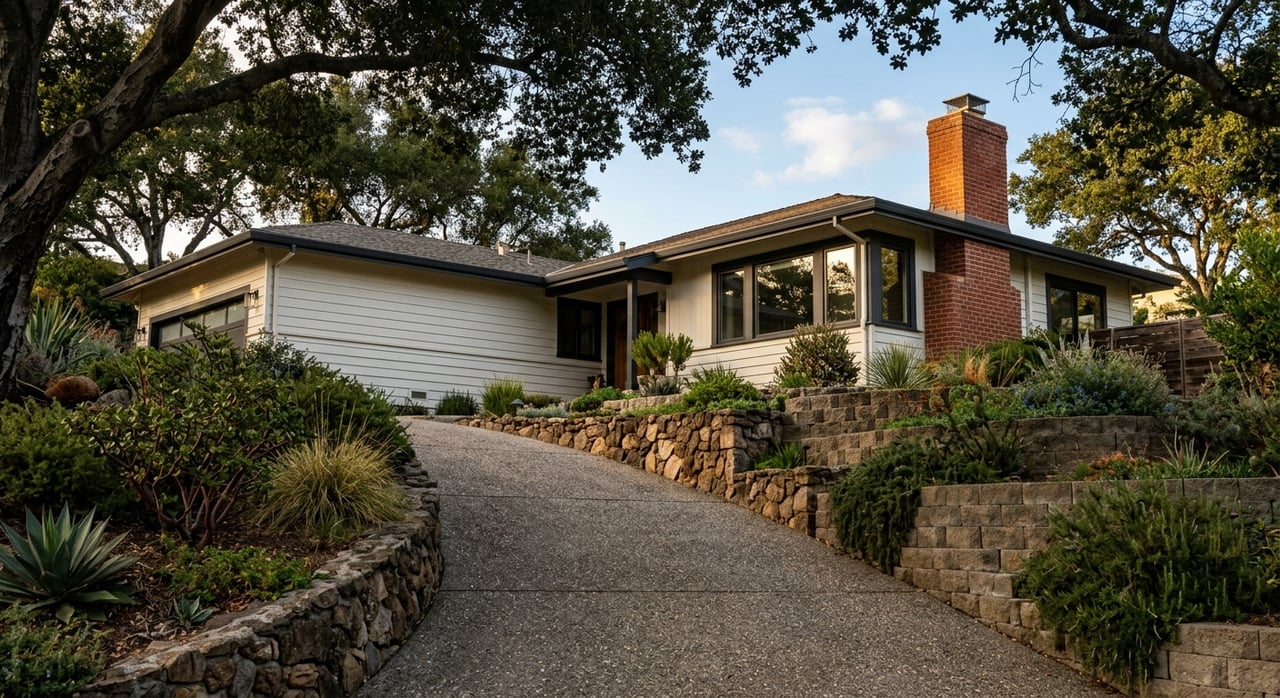
In Kensington, topography can be a major factor. On sloped or irregular parcels, drainage, grading, and retaining walls may have a bigger effect on cost and feasibility than the headline lot size.
Contra Costa County says drainage plans may be required when 500 square feet or more of construction is proposed on land where slope exceeds 10 percent. Retaining wall permits are required for walls 3 feet or more, and some projects may also need site-specific foundation plans or a geotechnical report.
Flag septic and well issues early
If a property uses septic or has a well, that should move to the top of your due diligence list. Contra Costa Health says construction on properties with septic systems or wells is subject to land-use regulations and environmental health review.
The county’s ADU guidance also notes that septic properties need Environmental Health review. In practical terms, that means you should identify this issue early, because it can affect both timeline and feasibility.
Home layouts that tend to work best
When buyers think about ADU potential, they often focus on the yard first. In many cases, the easier opportunity is actually inside the existing footprint of the home or within an existing accessory structure.
Homes with convertible space often stand out because they may require fewer major site changes. That can mean attached garages, lower levels, basements, attics, or detached structures that already sit in workable locations on the lot.
Strong candidates for attached ADUs
Contra Costa County allows attached ADUs to be created from rooms, attics, basements, or attached garages. A JADU must be within the footprint of a single-family residence and is capped at 500 square feet.
For buyers, this means homes with extra interior area can offer meaningful upside. If a property already has a lower level or attached garage that fits the layout, you may have a clearer path than you would with a house that has no convertible space.
Detached structures can also be valuable
Detached garages or sheds can be strong candidates too, provided the placement works and the structure can meet habitable-space standards. If the project is a conversion, the structure must stay within its existing footprint.
The county also says a new detached ADU up to 800 square feet and 16 feet high has streamlined processing and is not subject to parking requirements. That makes compact detached units worth a close look on the right lot.
Independent access matters
ADU potential is not just about finding square footage. Contra Costa County says an ADU must have independent exterior access separate from the primary dwelling, generally on the building side or rear or otherwise not visible from the street.
As you tour homes, think about how someone would enter and use the ADU day to day. A workable circulation pattern can make a promising property much more practical.
Parking may be less of an obstacle than you think
Parking concerns stop many buyers before they have all the facts. In reality, ADU parking rules are often more flexible than expected.
State guidance says parking standards for ADUs cannot exceed one space per unit or bedroom, whichever is less, and several ADUs are exempt from parking requirements. That includes units within one-half mile of public transit and units that are part of the primary residence or an accessory structure.
There is more good news if you are looking at a garage conversion. State guidance says local agencies may not require replacement parking when a garage, carport, or other parking structure is demolished or converted for an ADU.
Contra Costa County also says detached ADUs up to 800 square feet and 16 feet high are not subject to parking requirements. So even if driveway space is limited, the property may still deserve a closer look if access, safety review, and utility routing make sense.
How to evaluate a Kensington property quickly
If you want to sort listings efficiently, focus on the features most likely to affect real-world feasibility. This can help you separate homes with genuine ADU potential from homes that only look promising at first glance.
Here is a practical buyer checklist:
- Confirm the parcel is in unincorporated Contra Costa County and verify zoning through county tools.
- Check whether the property has a usable attached garage, basement, attic, lower level, or detached structure.
- Look for side-yard or rear-yard space that could support independent access or a compact detached unit.
- Assess slope, terracing, retaining walls, and drainage issues.
- Ask whether the property uses septic or a well.
- Consider how utilities and site circulation might work.
- Treat long-term rental or family use as the more realistic ADU strategy, not short-term rental income.
Why early due diligence pays off
Even preapproved ADU plans still require site-specific review in Contra Costa County. The county says those plans still need a site plan, foundation plan and details, and compliance with local health, safety, and fire requirements.
That is why the best ADU opportunities are often the homes where the site already does part of the work for you. A clean layout, manageable slope, and existing convertible footprint can reduce friction and help you make a more informed offer.
If you are comparing Kensington homes and want a practical read on which properties may offer the strongest value-add potential, working with someone who understands both local housing stock and investor-style analysis can help you avoid expensive assumptions. When you are ready to discuss a property search or evaluate a specific home, schedule a strategy consultation with Anastasia Levitansky.
FAQs
What makes a Kensington home a strong ADU candidate?
- Homes with a convertible footprint, such as an attached garage, basement, attic, lower level, or workable detached structure, often offer stronger ADU potential than homes that would require major site changes.
Can you build an ADU on a small lot in Kensington?
- Yes. State rules do not allow minimum lot size requirements for ADUs, so the better question is whether the site can meet setback, access, and safety requirements.
Do Kensington ADUs need parking?
- Not always. Several ADU types are exempt from parking requirements, and Contra Costa County says detached ADUs up to 800 square feet and 16 feet high are not subject to parking requirements.
Can you use a Kensington ADU as a short-term rental?
- No. Contra Costa County says ADUs are not allowed to be permitted for short-term rental use.
Why does slope matter for ADU potential in Kensington?
- Slope can trigger added drainage, grading, retaining wall, foundation, or geotechnical review, which may affect cost, complexity, and timeline.
What should you check first on a Kensington property with septic?
- You should flag septic conditions early because septic properties need Environmental Health review, which can affect ADU feasibility and planning.