If you want East Bay access without Berkeley-level pricing, Pinole deserves a closer look. This waterfront city offers a mix of bay views, established neighborhoods, trail access, and a historic downtown feel that can appeal to buyers looking for more space and a more relaxed setting. If you are weighing lifestyle, commute, and value at the same time, Pinole gives you a practical middle ground. Let’s dive in.
Why Pinole stands out
Pinole is best described as a suburban waterfront city with a compact historic core. City planning materials highlight its location on San Pablo Bay, its rolling hills, and its access to Berkeley, Oakland, and San Francisco via I-80. Old Town Pinole also retains a small-town, historic character that sets it apart from more purely freeway-oriented suburbs.
That combination matters when you are choosing where to buy. Pinole is not trying to be an urban core, and it is not a brand-new master-planned community either. Instead, it offers an established East Bay setting with a little more breathing room and a clear connection to the shoreline.
Bay views and outdoor access
One of Pinole’s biggest lifestyle advantages is how easy it is to get outside. For many buyers, that starts with Point Pinole Regional Shoreline, a 2,432-acre park with meadows, eucalyptus groves, bluffs, beaches, and 12 miles of trails. The park also includes Bay views that can stretch toward Mount Tamalpais and the Marin shoreline.
If you want a more local shoreline outing, Pinole also has access points along the San Pablo Bay Trail corridor. East Bay Parks notes access at the end of Pinole Shores Drive and at Bayfront Park, with trail connections that extend toward Hercules and Rodeo.
For a quick walk or sunset stop, Bayfront Park adds another layer to daily life in Pinole. The City describes it as a small local park with sweeping views of San Pablo Bay and the Golden Gate Bridge.
Outdoor space in Pinole is not limited to the waterfront. Pinole Valley Park & Picnic Grove spans 231 acres and includes trails, sports fields, tennis courts, picnic areas, and recreation space. That broader park network helps Pinole feel like a true residential suburb, not just a shoreline stop.
If you are researching trails in detail, there is one current note worth knowing. As of April 12, 2026, East Bay Parks reports that the Bay Trail east of the Atlas Bridge entrance at Point Pinole is closed because of a sinkhole, and no reopening timeline has been posted on the park page.
Old Town gives Pinole character
A lot of East Bay suburbs have convenient shopping corridors and established subdivisions. Fewer also have a downtown with visible historic fabric. In Pinole, that architectural character is centered in Old Town.
According to the City’s history overview, downtown still retains much of its historic and architectural character. Surviving older homes in the area include Queen Anne cottages, Hip Roof cottages, and bungalows, while several older commercial buildings still stand, including the Bank of Pinole.
That gives Pinole a more layered feel than buyers sometimes expect. You are not looking at a one-style housing market. You are looking at a city with multiple housing eras and a mix of residential settings.
What homes in Pinole look like
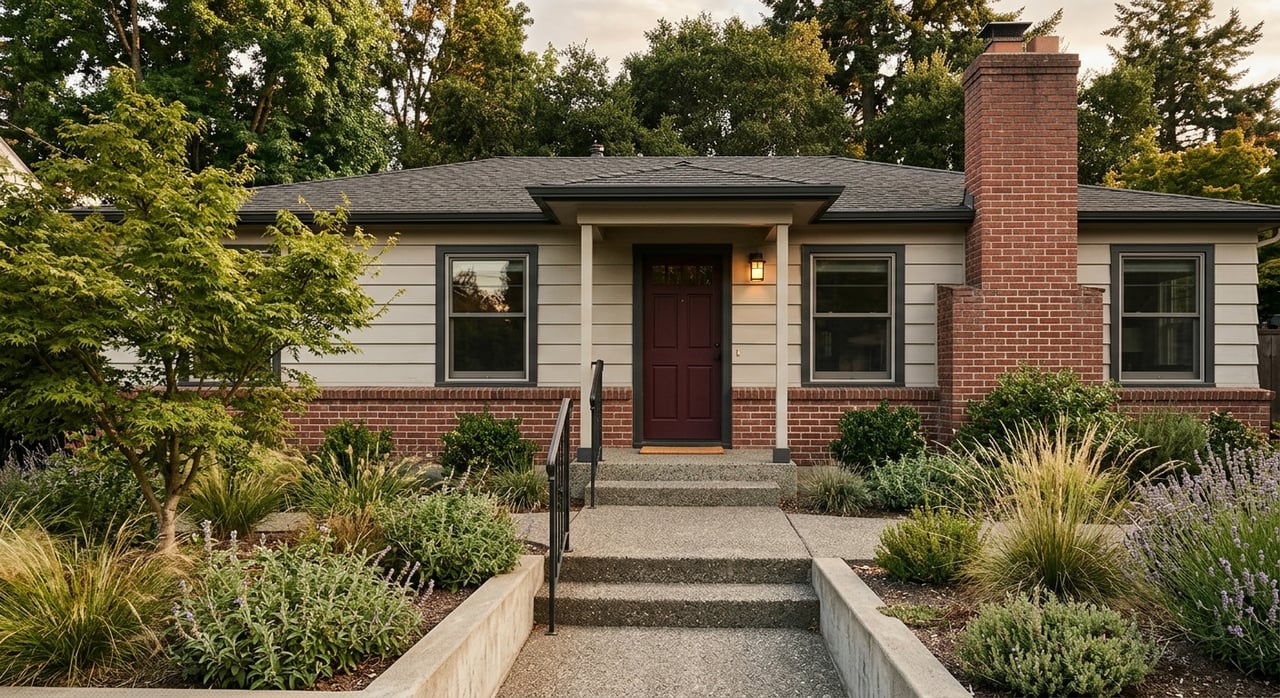
From a housing-stock perspective, Pinole offers variety rather than a single dominant look. Around downtown, the city’s older residential areas and mixed-use blocks reflect its earlier development pattern. Beyond that core, the housing pattern shifts into more familiar suburban neighborhoods with curving streets, cul-de-sacs, and established single-family homes.
City planning and economic development materials also describe higher-density apartment and townhome complexes along major arterials. Because the city is largely built out, Pinole tends to feel established rather than newly developed. That can be appealing if you prefer mature neighborhoods and a housing market with a broader range of home types.
For buyers, this means your search can be more flexible. Depending on your budget and goals, you may find older homes with architectural detail, more conventional suburban layouts, or attached housing closer to major roads and shopping areas.
Relative affordability is part of the story
Pinole’s appeal is not just about views and trails. It is also about what your budget may buy compared with nearby markets.
Based on February 2026 market figures from the research provided, Pinole’s median sale price was $711,000. In that same month, Oakland’s median sale price was $728,500, while Berkeley’s was $1,269,000. In simple terms, Pinole came in slightly below Oakland and far below Berkeley in that snapshot.
The price-per-square-foot comparison points in the same direction. Pinole was reported at $463 per square foot, compared with $582 in Oakland and $989 in Berkeley. For buyers who want East Bay access but need to keep an eye on monthly cost, space, and long-term value, that difference can be meaningful.
Of course, affordability is always relative. Your actual options will depend on inventory, property condition, lot size, location within Pinole, and how much updating a home needs. Still, the broader takeaway is clear: Pinole can offer a more accessible entry point than some better-known inner East Bay markets.
Commute reality: car-friendly and bus-connected
Pinole works best when you understand its transportation setup clearly. It is car-friendly and bus-connected, not rail-centered.
The city’s General Plan notes its access to the larger East Bay via I-80, which is a major reason buyers consider the area in the first place. At the same time, the city does not have its own BART service. That means many commuters combine driving with regional connections, or use bus service to reach BART.
WestCAT operates more than 230 bus stops across western Contra Costa communities, including Pinole, and its express routes connect Hercules, Pinole, and El Cerrito del Norte BART. AC Transit also serves Pinole, including Line 70 connections between El Cerrito del Norte BART, Richmond Parkway Transit Center, and the Pinole Shopping Center.
For some buyers, that setup is completely workable. For others, especially those who want to walk to rail, it may be less ideal. The key is to match your daily routine with the city’s actual transportation pattern instead of assuming a transit setup that is not there.
Who Pinole may fit best
Pinole can make sense for several kinds of buyers and sellers, especially if you are comparing tradeoffs across the East Bay.
You may want to look more closely at Pinole if you are searching for:
- More home for your budget than you may find in Berkeley
- Access to shoreline parks and open space
- An established suburban setting with a small historic downtown
- A location with freeway convenience and bus links to BART
- A housing market with multiple home styles and development eras
For sellers, Pinole’s positioning is also important. Buyers are often drawn by the same combination of relative value, outdoor access, and East Bay connectivity. If you are preparing to list, understanding how your home fits into that story can help shape pricing, presentation, and marketing.
What to keep in mind before buying
As with any market, Pinole works best for buyers who understand both the upside and the tradeoffs. The upside is clear: bay access, major parks, an established housing stock, and pricing that can look more approachable than Berkeley. The tradeoff is that it is not a rail-centered market, and home styles and neighborhood patterns vary more than they do in smaller, more uniform communities.
That is why local, data-informed guidance matters. When you compare homes in Pinole, it helps to look beyond list price and ask how location, access, lot, condition, and long-term value line up with your goals. A house near shoreline access may serve one buyer best, while another may prioritize freeway convenience, lot size, or a more traditional suburban layout.
If you are considering a move in Pinole or comparing it with Berkeley, Kensington, or nearby East Bay markets, Anastasia Levitansky can help you evaluate the numbers, the lifestyle fit, and the best strategy for your next step.
FAQs
What is the lifestyle like in Pinole, California?
- Pinole offers a suburban waterfront setting with a historic downtown area, established neighborhoods, and access to shoreline parks, trails, and regional commuting routes.
Are homes in Pinole more affordable than Berkeley homes?
- Based on the February 2026 market snapshot in the research provided, Pinole had a lower median sale price and lower price per square foot than Berkeley.
What outdoor amenities are available in Pinole?
- Pinole offers access to Point Pinole Regional Shoreline, the San Pablo Bay Trail corridor, Bayfront Park, and Pinole Valley Park & Picnic Grove.
Does Pinole have BART service?
- Pinole does not have its own BART station, but bus connections from WestCAT and AC Transit can link riders to El Cerrito del Norte BART and other regional transit points.
What types of homes are common in Pinole?
- Pinole has a mix of home styles, including historic homes near Old Town, established suburban single-family neighborhoods, and some apartment and townhome complexes along major arterials.