If you have looked at Berkeley prices and wondered whether a property can help offset its own cost, you are not alone. In a market where the city reported a $1,265,000 median single-family sale price, 28 days on market, and 57% of homes selling above list price in late 2025, buyers often need a more creative plan than simply stretching their budget. The good news is that Berkeley now has a clearer path for ADUs and Junior ADUs, which can make a house-hack strategy more realistic if you underwrite it carefully. Let’s dive in.
Why Berkeley house hacking matters
Berkeley is a classic example of a high-demand, high-cost market. That does not mean house hacking is off the table. It means your strategy needs to be based on actual city rules, realistic long-term rents, and the right property type.
ADUs are no longer rare here. City materials show ADU permits rising from 16 in 2016 to 102 in 2024, with 91 certificates of occupancy issued in 2023, which tells you accessory units are becoming a meaningful part of Berkeley housing rather than a niche idea. According to the City of Berkeley's ADU materials, more buyers are clearly looking at secondary-unit potential as part of the value equation.
What house hacking can look like
For Berkeley buyers, house hacking usually means buying a home with one of these setups:
- A legal existing ADU
- A legal or potentially legalizable in-law or garage conversion
- A lot where you can add a new ADU
- A single-family property where a Junior ADU may also be possible
The goal is simple: live in one portion of the property and use the other unit to generate long-term rental income. In practice, the strongest deals are usually the ones where the second unit is already legal or has a clear path to legalization.
Berkeley ADU rules to know first
Before you get excited about projected income, you need to understand what Berkeley actually allows. The city's current ADU rules and permit process use a ministerial building-permit process rather than discretionary review, which can reduce uncertainty for buyers planning a compliant project.
Single-family lot limits
On a single-family lot, Berkeley allows:
- 1 ADU
- 1 Junior ADU
That combination can create useful flexibility, but it does not mean every lot is equally easy or cost-effective to develop. Site layout, access, slope, and existing structures still matter a lot.
Size, height, and setback basics
Berkeley's ADU information handout lists these common standards for new construction:
- Up to 850 square feet for a studio or one-bedroom ADU
- Up to 1,000 square feet for a two-bedroom-or-larger ADU
- Up to 500 square feet for a Junior ADU
- Detached ADUs generally up to 20 feet tall
- Attached ADUs generally up to 25 feet tall
- Generally 4-foot rear, interior, and street-side setbacks
In many cases, conversions of existing space or structures can be more flexible than brand-new detached construction. That is one reason older Berkeley properties can be interesting for buyers with an ADU strategy.
Hillside Overlay changes the math
Not every Berkeley parcel offers the same ease of development. In the Hillside Overlay, the rules are tighter. The city's handout says ADUs there generally require 1 parking space per unit unless an exemption applies, and detached ADUs also face building-separation requirements that can complicate planning.
If your goal is the cleanest, most straightforward house-hack setup, flatter lots outside the Hillside Overlay often deserve extra attention. That does not make hillside properties impossible, but it can change cost, design, and timeline.
Owner occupancy and short-term rental limits
This is one of the most important underwriting points. If a property has an ADU, the owner does not have to live onsite. If it has a Junior ADU, the owner must live in either the primary home or the Junior ADU, according to the city's ADU FAQ.
Berkeley also records a deed restriction before permit issuance that bars separate sale of the accessory unit and prohibits short-term rental use in most cases. That means you should underwrite a Berkeley ADU as a long-term rental, not an Airbnb-style income play.
What rent should you really assume?
This is where many buyers get into trouble. It is easy to look at best-case listings and build your numbers around optimistic rent. A better approach is to use a conservative range and stress test the deal.
Recent Berkeley rent snapshots vary by source and method. Zumper's Berkeley rent data reports a median rent of $2,895 across all bedroom counts, with average one-bedrooms at $2,295 and two-bedrooms at $3,102. The same research summary notes that Oakland Housing Authority payment standards are $2,385 for one-bedroom units and $2,912 for two-bedroom units in the broader metro area.
A practical Berkeley underwriting range for a smaller ADU is often:
- $2,295 to $2,385 per month for a one-bedroom-type unit
- $2,912 to $3,102 per month for a two-bedroom-type unit
Use the lower end unless the unit's finish level, layout, and location clearly support more. Then add vacancy and concession assumptions so your numbers still work when the real world is less tidy than the spreadsheet.
Expenses buyers often miss
Rental income is only half the picture. House hacking works best when you model the expense side honestly.
Property tax can rise after new construction
According to the Alameda County Assessor, property tax is generally 1% of assessed value plus voter-approved bonds and fees, and new construction is added to the assessment. If you build an ADU, that can increase the tax bill even if the original home has a much older tax base.
Rental safety fees are ongoing
Berkeley's Rental Housing Safety Program requires an annual self-inspection by July 1 and charges $60 per residential rental unit. If issues are found or deadlines are missed, added fees or citations can apply.
That annual requirement may not be huge on its own, but it belongs in your underwriting. Small recurring costs matter when you are trying to judge whether a property truly helps your monthly budget.
Permit and plan-check costs matter too
If you are building rather than buying an existing legal unit, permit fees need to be part of your up-front budget. Berkeley's pre-approved ADU design page says pre-approved plans can lower cost and speed approvals, and the city applies a reduced plan-check fee for those designs.
The same city resource also notes a $500 neighbor-noticing fee with a new ADU building permit application. Even before construction starts, that is a reminder that your budget should include more than contractor bids alone.
Rent control can affect your projections
This is another place where Berkeley buyers need to be careful. The Berkeley Rent Board explains that many pre-1980 multi-unit properties are fully covered, some single-family tenancies are partially covered, and the state single-family exemption can fail when there is more than one dwelling unit on the lot or a second unit that cannot be sold separately.
In plain English, adding an ADU can affect the rent-growth rules you should assume. That does not automatically kill a deal, but it does mean you should not base your projections on aggressive future rent increases.
Room-rental strategies need special care too. The Rent Board notes that single-family homes with five or more rooms rented individually under separate leases can be fully covered, which means renting bedrooms is not the same thing as renting a separate ADU.
What to check before you write an offer
The best Berkeley house-hack opportunities usually share a few practical features. They are not always the prettiest listings at first glance, but they often have the strongest path to stable long-term value.
Look for these traits:
- A legal ADU or a unit with a clear legalization path
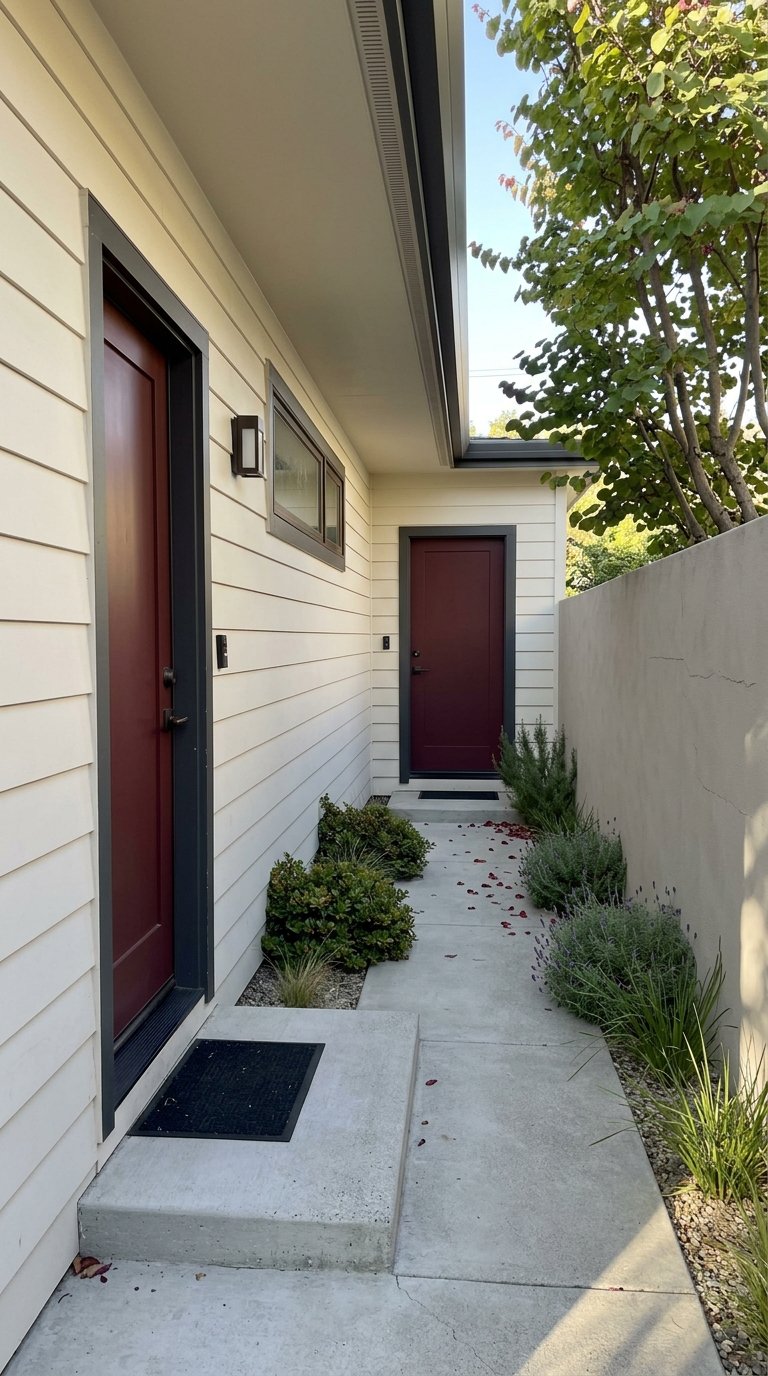
- Separate entry for the secondary unit
- A flat or lightly sloped lot
- Site access that supports a garage or accessory-structure conversion
- Existing structures that may qualify for in-place conversion
Berkeley specifically allows conversion of some legally nonconforming accessory structures in place, which can be valuable in the city's older housing stock. That can create opportunity where another buyer only sees an old garage or detached structure.
Ask for these documents early
Before making an offer, ask for:
- Permit history
- Certificates of occupancy
- Any recorded deed restrictions
- Information on whether the unit is legal, nonconforming, or unpermitted
If you are looking at an unpermitted unit on a single-family lot, Berkeley's Amnesty Program for unpermitted dwelling units may provide a path to legalization for qualifying pre-2020 ADUs and Junior ADUs through December 31, 2028. That is helpful, but you still want to verify eligibility before you count on it.
A practical Berkeley underwriting sequence
If you want to evaluate a property clearly, keep the process simple and disciplined.
Step 1: Verify site and zoning basics
Start by confirming the parcel conditions and whether the lot's physical layout supports your plan. Hillside constraints, parking requirements, access, and building separation can all influence whether an idea works on paper and in reality.
Step 2: Confirm legality or legalization path
A second unit only helps your financing strategy if it is legal or can realistically become legal. Existing permits, certificates of occupancy, and amnesty eligibility should all be reviewed early.
Step 3: Check rent-control framework
Do not assume a property will be treated like a simple exempt single-family home once there is more than one dwelling unit on the lot. Berkeley's local rules can affect future rent assumptions.
Step 4: Use conservative long-term rents
Avoid short-term rental fantasy math. Berkeley's short-term rental rules make clear that ADUs built after April 1, 2017 are generally not eligible for short-term rental use, and STR use has taxes, registration requirements, and operating limits even where allowed.
Step 5: Layer in real expenses
Add property tax effects, permit costs, annual rental-safety fees, vacancy, maintenance, and any likely upgrade costs. If the property still works after all of that, you may have a strong candidate.
The strongest Berkeley house-hack deals
In Berkeley, the most resilient house-hack opportunities are usually not the ones with the flashiest projected numbers. They are the ones where the unit is already legal or can be legalized, the lot supports the plan without major surprises, and the income estimate is based on conservative long-term rent rather than best-case assumptions.
That kind of discipline matters in a city where competition is strong and mistakes are expensive. If you want to buy with an ADU or house-hack strategy in mind, working from city rules and real numbers can help you avoid overpaying for potential that never turns into usable value.
If you want help evaluating Berkeley properties through that lens, Anastasia Levitansky can help you compare opportunities, pressure-test the numbers, and build a strategy around what is actually feasible in this market.
FAQs
What does house hacking mean for Berkeley buyers?
- For Berkeley buyers, house hacking usually means living in the main home or one unit and using an ADU, Junior ADU, or other legal secondary unit to generate long-term rental income that helps offset ownership costs.
What ADU options are allowed on a Berkeley single-family lot?
- Berkeley allows 1 ADU plus 1 Junior ADU on a single-family lot, subject to the city's current development standards, permit rules, and site constraints.
What rent should Berkeley buyers assume for an ADU?
- A conservative working range is roughly $2,295 to $2,385 per month for a one-bedroom-type ADU and $2,912 to $3,102 per month for a two-bedroom-type ADU, with stress testing for vacancy and concessions.
Can a Berkeley ADU be used as a short-term rental?
- In most cases, no. Berkeley prohibits short-term rental use of ADUs and Junior ADUs except in narrow legacy situations, so buyers should generally underwrite long-term rental income instead.
What should Berkeley buyers review before offering on a home with an ADU?
- You should review permit history, certificates of occupancy, deed restrictions, legality of the unit, possible amnesty eligibility for qualifying older unpermitted units, and whether rent-control rules may affect future income assumptions.
Do Berkeley ADUs affect property taxes and operating costs?
- Yes. New ADU construction can increase assessed value for tax purposes, and Berkeley also requires annual rental-safety compliance with fees for residential rental units.